
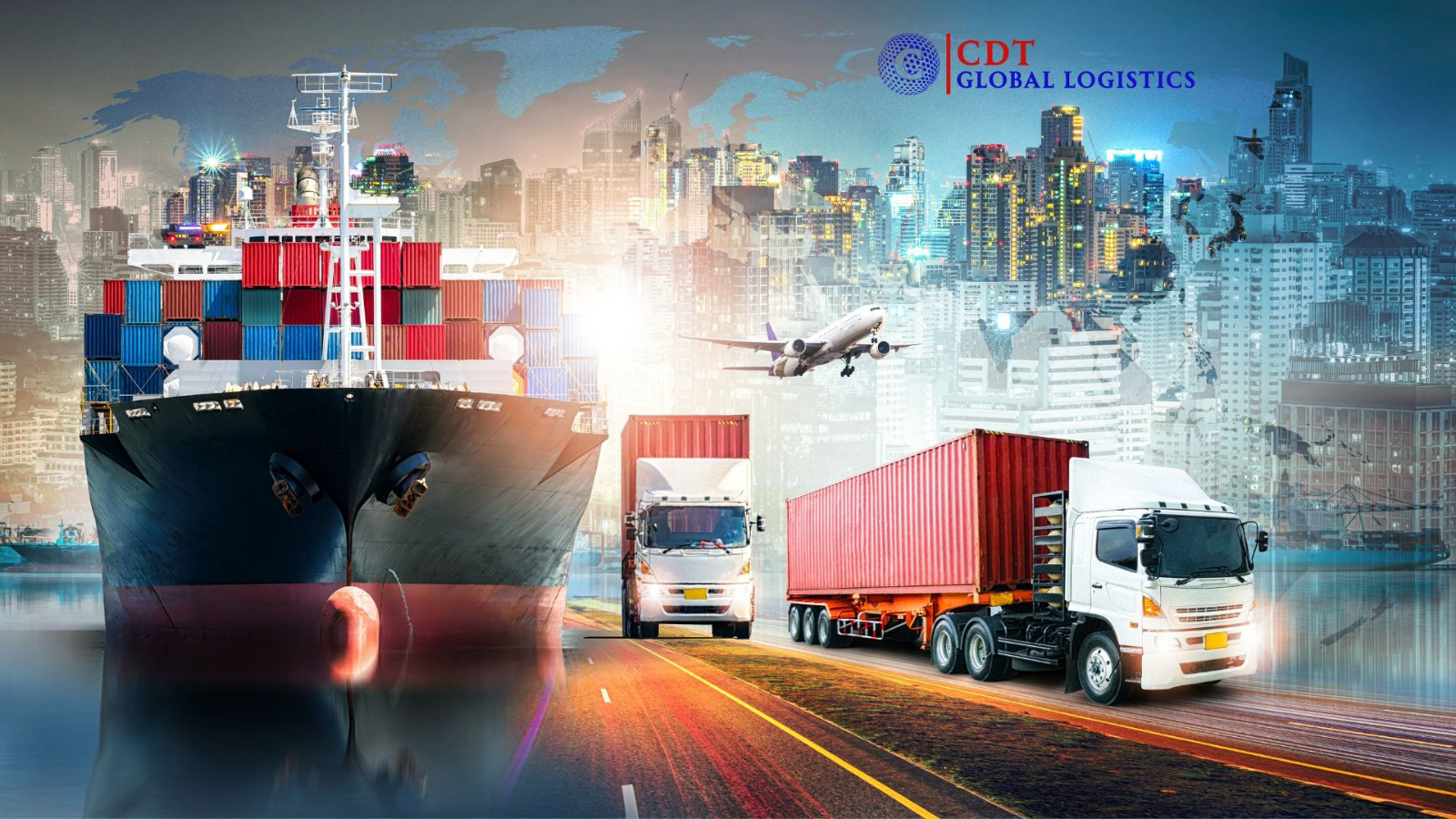
Global Logistics choose the right partner for your business.
How to Choose the Right Global Logistics Partner for Your Business, and Why It Matters More Than You Think
How to Choose the Right Global Logistics Partner for Your Business, and Why It Matters More Than You Think

If you've ever shipped products internationally, you know the feeling: Will my cargo arrive on time? Did I fill out the customs paperwork correctly? Why is tracking showing my shipment stuck in port for three days?

Global logistics shouldn't keep you up at night. But for many businesses expanding into international markets, the complexity of moving goods across borders can feel overwhelming. After working in the logistics industry for over two decades, I've seen companies struggle with delayed shipments, unexpected fees, and damaged cargo all because they didn't have the right logistics partner.

Today, I want to share what I've learned about choosing a global logistics provider and how the right partnership can transform your supply chain from a constant headache into a competitive advantage.

The Hidden Costs of Getting Logistics Wrong

Last year, I spoke with a client who was importing electronics from China. She thought she'd save money by handling customs clearance herself and using the cheapest freight forwarder she could find.

Three months later, her shipment was still sitting in a warehouse because one form had the wrong HS code. The storage fees alone cost more than hiring a customs broker would have. Even worse? Her customers were canceling orders because products weren't arriving.

This story isn't unique. Poor logistics decisions cost businesses thousands — sometimes millions — in lost revenue, damaged relationships, and missed opportunities.

The real question isn't "How much does shipping cost?" It's "How much does bad shipping cost?"

What Makes a Great Global Logistics Partner?

After managing thousands of international shipments, I've identified five qualities that separate exceptional logistics providers from mediocre ones.

They Actually Understand Your Industry

Not all cargo is the same. Shipping fashion apparel is completely different from shipping industrial machinery. A great logistics partner knows your industry's specific challenges.

At CDT Global Logistics, we've worked with everyone from automotive manufacturers to e-commerce startups. When a pharmaceutical company needs temperature-controlled shipping with FDA compliance, we know exactly what that entails. When a construction company needs to ship heavy equipment to a remote location, we've done it before.

Pro tip: Ask potential logistics partners about their experience in your specific industry. If they can't give you concrete examples, keep looking.

They're Proactive, Not Reactive

The worst logistics providers only contact you when there's a problem. The best ones prevent problems before they happen.

I remember a shipment headed to Europe that would have missed a critical delivery window due to a dock workers' strike. Our team rerouted the cargo through a different port two days before the strike began. The client never even knew there was an issue.

What to look for: real-time tracking, proactive communication, and a provider who monitors global events that could impact your shipments.

Why Rail Transport Services Are Making a Comeback

Here's something that might surprise you: rail freight is experiencing a renaissance.

For decades, companies defaulted to trucking for overland freight. But with rising fuel costs, driver shortages, and increasing pressure to reduce carbon emissions, rail transport services are becoming the smart choice for many businesses.

The Numbers Don't Lie

Rail freight produces 75% fewer carbon emissions than trucking. It's also significantly cheaper for bulk shipments — sometimes up to 40% less expensive than road transport.

One of our manufacturing clients switched from trucking to rail for their cross-country shipments. They saved $180,000 annually while cutting their carbon footprint in half. Their customers loved it — sustainability sells.

Rail makes the most sense for bulk commodities like grain, coal, and chemicals, as well as container shipments over 500 miles, non-urgent cargo with flexible timelines, and companies prioritizing sustainability. It's less ideal for last-mile delivery, urgent shipments, or areas without rail access.

The key is knowing when to use rail as part of a multimodal strategy. Smart logistics isn't about using one method for everything — it's about choosing the right method for each shipment.

The Warehouse Solutions Mistake That's Costing You Money

Let me ask you a question: Are you paying for warehouse space you're not using?

Many businesses lease warehouses on long-term contracts, then watch their storage costs balloon during slow seasons. Or worse — they run out of space during peak season and scramble to find temporary solutions. There's a better way.

Flexible Warehousing Changes Everything

Modern warehouse solutions should scale with your business. Need extra space for holiday inventory? Expand. Slow season? Contract. No long-term commitments, no wasted square footage.

We recently helped an e-commerce retailer who was drowning in inventory costs. They were leasing 50,000 square feet year-round but only needed that much space three months a year. We moved them to a flexible warehouse solution, and they immediately cut storage costs by 60%.

When evaluating warehouse solutions, look for strategic locations near ports and transportation hubs, climate-controlled options (essential for food, pharmaceuticals, and electronics), inventory management systems that integrate with your platform, value-added services like kitting, labeling, and quality control, and above all — scalability in both directions. Any warehouse provider that requires multi-year contracts without flexibility is stuck in the past.

Customs Clearance: The Part Everyone Hates (And How to Make It Easy)

I'll be honest: customs clearance is where most international shipping problems happen. Regulations change constantly. One missed form, one incorrect tariff code, one miscalculated duty payment — and your shipment sits in customs for days or weeks.

The $10,000 Typo

A client once came to us after their shipment was held at customs. The problem? Their previous customs broker misclassified their product. Instead of paying $2,000 in duties, they were hit with $10,000 in penalties and back duties. This happens more often than you'd think. Customs authorities don't care if it was an honest mistake — you're still responsible.

Professional customs clearance involves accurate HS code classification to determine duty rates, proper valuation (undervaluing cargo can trigger audits while overvaluing costs you money), complete documentation including commercial invoices, packing lists, and certificates of origin, thorough knowledge of trade agreements like USMCA that can save thousands, and established relationships with customs officials that help get faster processing.

At CDT Global Logistics, our customs specialists handle hundreds of clearances monthly. We know which ports are fastest, which forms each country requires, and how to expedite clearance when time matters.

Bottom line: never try to handle customs yourself unless you're a licensed customs broker. The money you save isn't worth the risk.

International Vehicle Shipping: More Than Just Cars on a Boat

Shipping vehicles internationally is its own specialized world. Whether you're an automotive dealer, equipment exporter, or individual relocating overseas, vehicle shipping has unique challenges.

RoRo vs. Container: Which Should You Choose?

RoRo (Roll-on/Roll-off) shipping is best for operational vehicles in good condition. It offers lower costs and faster loading, though vehicles are exposed to weather and have less security. It's the perfect option for bulk vehicle shipments and standard cars and trucks.

Container shipping, on the other hand, is best for luxury vehicles, classic cars, and high-value equipment. It provides maximum protection and allows you to include spare parts or personal belongings alongside the vehicle. It is more expensive and involves a longer process, but it's ideal for collector vehicles, motorcycles, and anything requiring extra care.

Last month, we shipped a 1967 Mustang to Germany for a collector — container shipping was non-negotiable, as the car was worth $85,000. We also helped a construction company ship 15 bulldozers to South America via RoRo, saving them $30,000 compared to container shipping.

What many people don't know is that vehicle shipping involves complex documentation including EPA compliance forms, safety certifications, and emissions testing. A good international vehicle shipping provider handles all of this so you don't have to.

Cargo Handling: Why This Matters More Than You Think

Your cargo is your livelihood. Whether it's $10,000 worth of electronics or $1 million in industrial equipment, proper cargo handling is what stands between successful delivery and insurance claims.

The Real Cost of Poor Handling

I once inspected a shipment of high-end furniture that arrived damaged. The problem was improper loading — the freight forwarder stacked heavy items on top of fragile pieces, didn't use protective materials, and failed to secure the load properly. The result was $40,000 in damaged goods, angry customers, and a destroyed reputation.

Professional cargo handling includes pre-shipment inspection to identify potential issues before loading, proper packaging through crating, shrink-wrapping, and protective padding, correct weight distribution to prevent shifting during transport, specialized equipment like forklifts, cranes, and climate control, and trained personnel — because not just anyone should handle valuable cargo.

Different commodities need different approaches. Hazardous materials require HAZMAT certification, perishables need temperature monitoring, electronics demand static-free environments, and machinery requires proper rigging and lifting. A good question to ask your logistics provider: "What certifications do your cargo handlers have?" If they can't answer specifically, that's a red flag.

The Technology That's Transforming Global Logistics

Gone are the days of calling your freight forwarder to ask, "Where's my shipment?" Modern global logistics runs on technology — and if your provider isn't using it, you're at a disadvantage.

Your logistics partner should offer real-time GPS tracking with automated updates so you know exactly where your cargo is at any moment, predictive analytics that use AI to forecast potential delays based on weather, port congestion, and historical data, an integrated platform giving you one dashboard for all shipments, documentation, and invoices, and full mobile access so you can track shipments, approve paperwork, and communicate from your phone.

At CDT Global Logistics, our clients log into their portal and see every active shipment, estimated arrival times, and any potential issues — all in real-time. No phone tag, no email chains, no uncertainty.

Putting It All Together: Your Logistics Checklist

If you're evaluating global logistics partners, here's what to consider. On industry experience: do they understand your specific product type, and can they provide references from similar businesses? On services: do they offer rail, ocean, air, and road freight options along with customs clearance expertise, warehouse solutions, and cargo insurance? On technology: do they provide real-time shipment visibility, automated notifications, and an easy-to-use online platform? On global network: do they have partners in the countries you ship to and from, with local expertise and established customs relationships? On pricing: are quotes clear with no hidden fees, all-inclusive options available, and payment terms that work for your business? And on communication: do they provide regular updates without you asking, a dedicated point of contact who knows your business, and quick response times?

Why CDT Global Logistics Is Different

I didn't write this post just to explain logistics concepts — I wrote it because I believe businesses deserve better than what most logistics providers offer.

At CDT Global Logistics, we've built our reputation on a simple principle: your success is our success. When your shipment arrives on time, when customs clear without issues, when your warehouse inventory is perfectly managed — that's when we've done our job.

We handle everything from rail transport services to international vehicle shipping, from customs clearance to warehouse solutions. But more importantly, we become your partner. We learn your business, anticipate your needs, and solve problems before they impact you.

Ready to Improve Your Global Logistics?

If you're tired of logistics providers who only call when there's a problem, let's talk. Get a free quote on your next shipment, or schedule a consultation to discuss your supply chain challenges.

Contact CDT Global Logistics: Email: info@cdtgloballogistics.com Phone: (866) 533-1520 Website: cdtgloballogistics.com

Logistics can be confusing. If you have questions about international shipping, customs clearance, or any aspect of global logistics, don't hesitate to reach out about international shipping, customs clearance, or any aspect of global logistic contact us.
Leave a Reply